

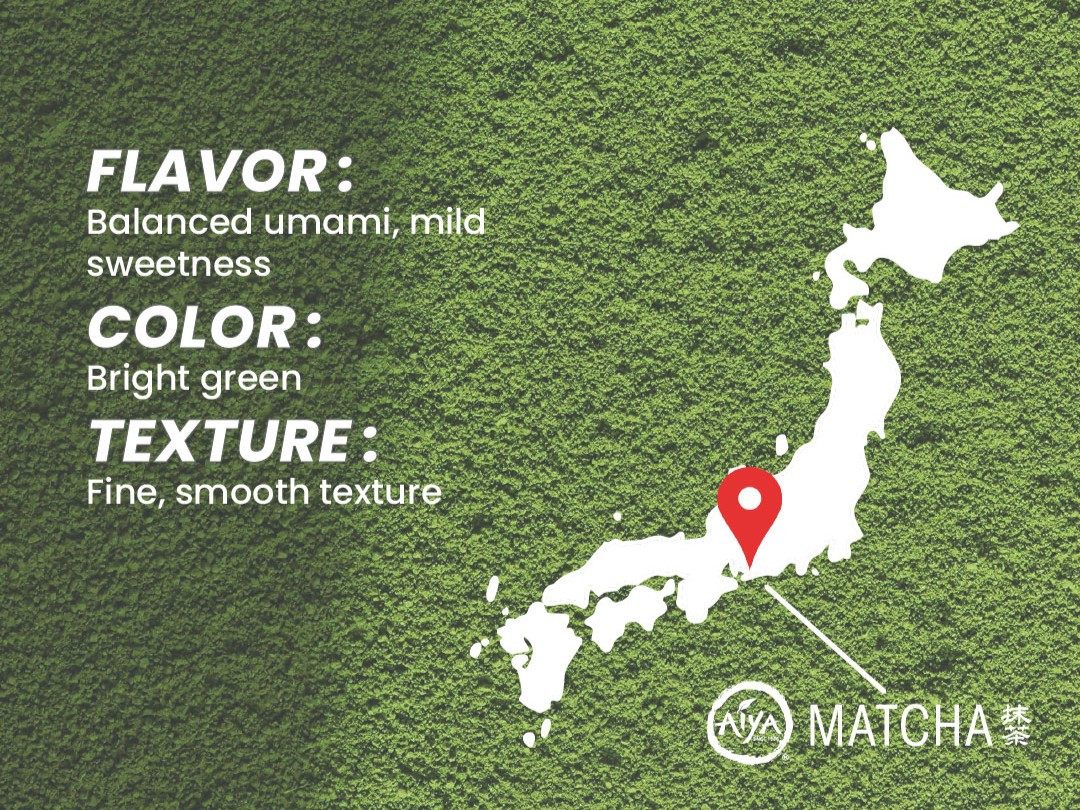
Regional Matcha Flavors
Posted by Aiya Matcha on May 20th 2026 Reading time:
How Matcha Differs Across Uji, Kagoshima, and Nishio
For 138 years, Aiya has been rooted in the traditions of Japanese tea culture. From our home in Nishio to tea fields across Japan, every cup of Matcha reflects the history, craftsmanship, climate, and region behind it.
As we celebrate Aiya’s 138th anniversary, we wanted to honor the regions that have helped shape Matcha as we know it today. Like wine grapes or coffee beans, tea leaves reflect the land and farming methods where they are grown.
Among Japan’s most respected tea regions, Uji, Kagoshima, Shizuoka, and Nishio each offer their own distinct expression of Matcha.
Uji: The Historic Heart of Matcha
Located near Kyoto, Uji is often considered the birthplace of Japanese Matcha culture. With tea growing history dating back to the 12th century, the region is known for refined Matcha with deep umami, natural sweetness, and a smooth finish.
Uji’s cool mornings, misty air, and mineral rich soil contribute to the complexity of its teas. The region is also known for cultivating specialty tea varieties such as Asahi, Samidori, and Gokou, which are prized for producing richly aromatic tencha.
Matcha from Uji is often described as creamy, layered, and deeply savory. Its long connection to Japanese tea ceremonies has made it one of the world’s most recognized tea regions.
Kagoshima: Vibrant and Modern
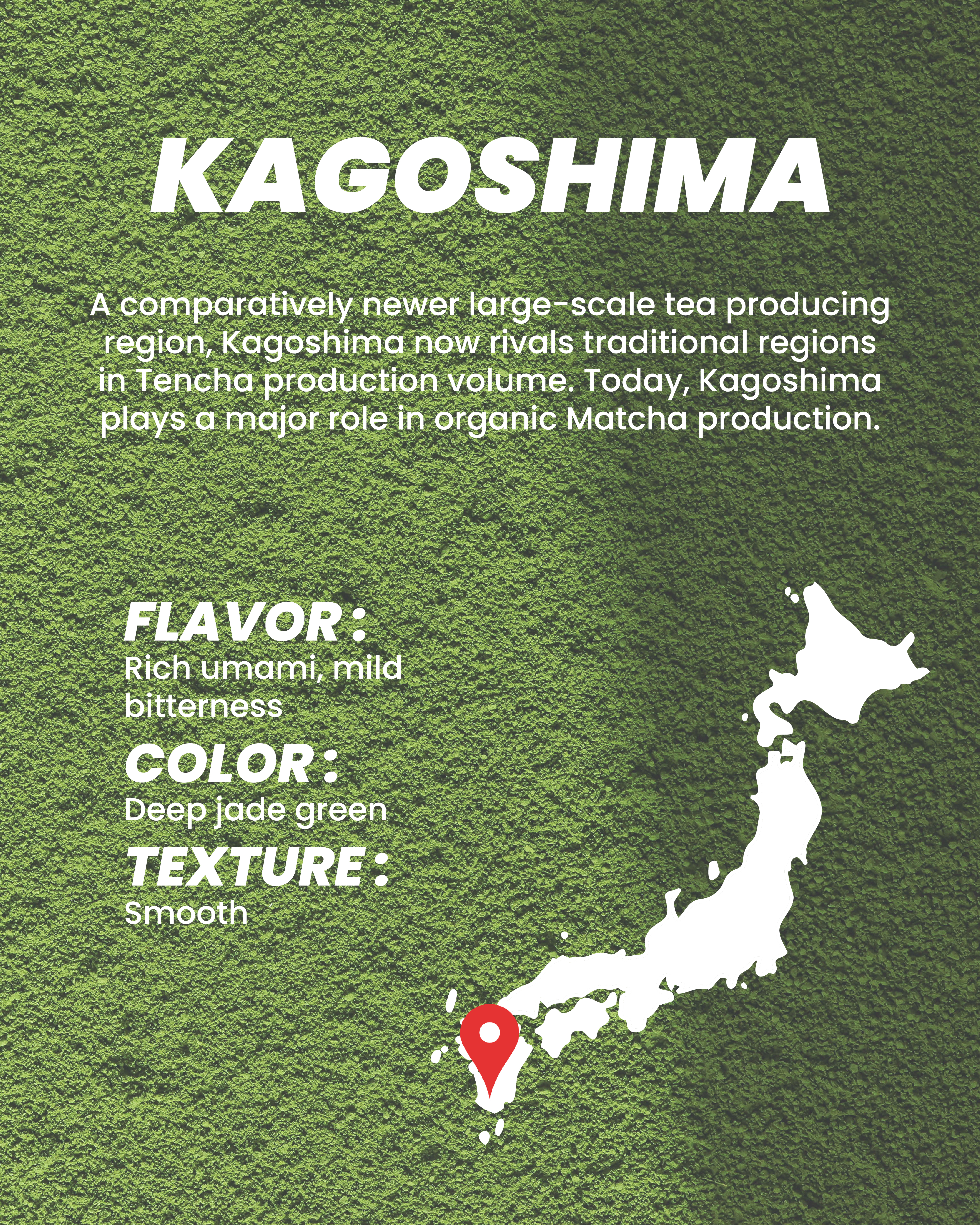
At Aiya, we are proud to source most of our organic Matcha from Kagoshima, located at the southern tip of Japan. Known for its fertile volcanic soil, warm climate, and abundant rainfall, Kagoshima has quickly become one of Japan’s leading Tencha producing regions.
The region produces Matcha with vibrant color, rich aroma, and a naturally smooth, full bodied flavor. Kagoshima is also recognized for its innovation, large scale cultivation, and leadership in organic tea production and export.
By sourcing our organic Matcha from Kagoshima while remaining deeply connected to our roots in Nishio, we are able to honor both tradition and forward thinking craftsmanship.
Shizuoka: Fresh and Bright
As Japan’s largest tea producing region, Shizuoka is known for its expansive tea fields and long standing tea culture. While historically recognized for sencha and gyokuro, many producers have recently expanded into Matcha production in response to growing global demand.
Matcha from Shizuoka is often characterized by bright freshness, smooth texture, and a clean finish with delicate sweetness. Its approachable profile makes it especially popular for everyday enjoyment and modern Matcha beverages.
Aiya’s Roots in Nishio
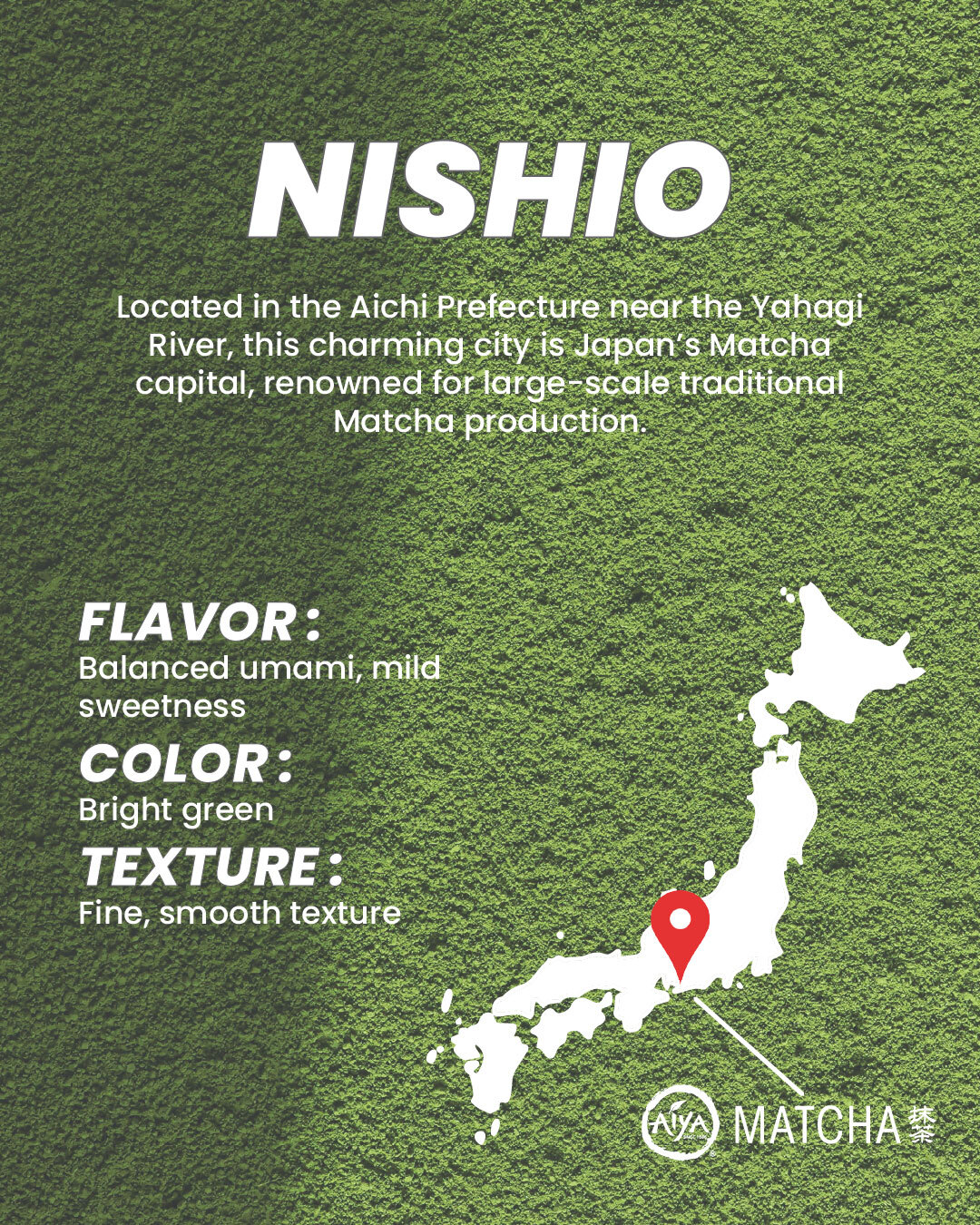
Aiya’s story begins in Nishio, one of Japan’s most important Matcha producing regions. Nishio is known for smooth, balanced Matcha with vibrant color and mellow depth, supported by fertile soil, gentle river mist, and generations of expertise.
Today, Nishio is recognized both for its tea ceremony heritage and its important role in culinary Matcha production worldwide. This balance between tradition, craftsmanship, and innovation continues to shape Aiya today.
For more than a century, Aiya has remained committed to preserving Japanese tea traditions while sharing Matcha with the world.
Celebrating the Diversity of Japanese Matcha
One of the most beautiful things about Matcha is that no two regions taste exactly alike. From the historic elegance of Uji to the vibrant fields of Kagoshima, the fresh character of Shizuoka, and the balanced depth of Nishio, each region contributes to the story of Japanese tea.
As Aiya celebrates 138 years, we are grateful for the farmers, regions, and traditions that continue to inspire us every day. Exploring regional Matcha differences is more than a tasting experience. It is a way to connect with the people, landscapes, and history behind every bowl.
No matter where it is grown, authentic Japanese Matcha carries generations of care within every sip.